
Najnowsze wpisy
-
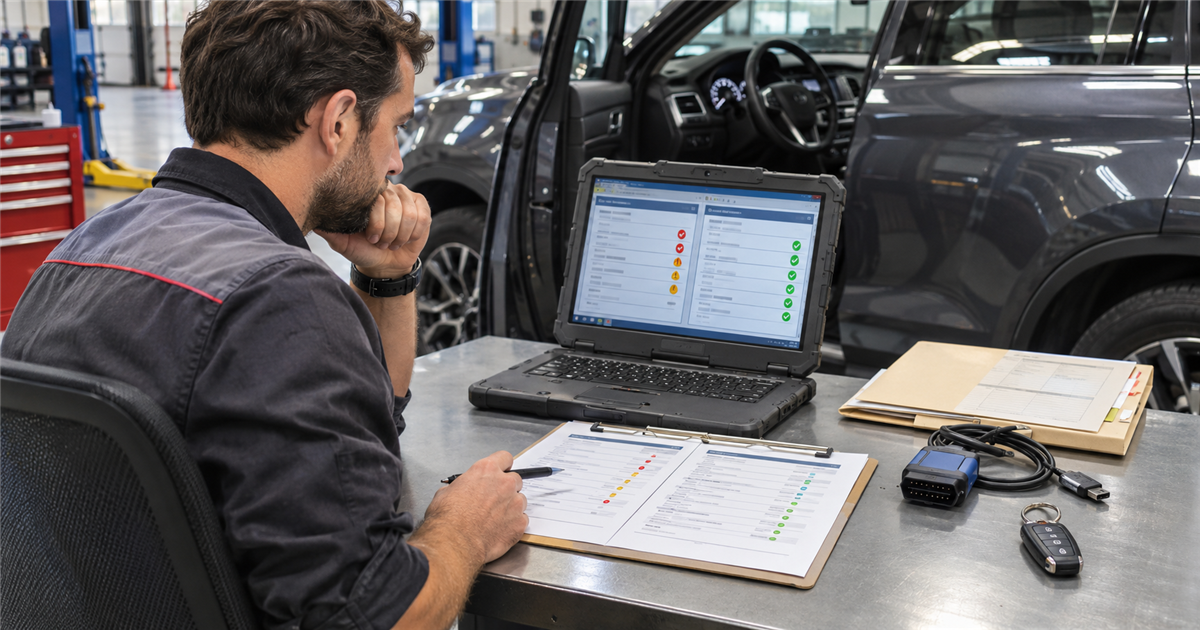
How to Compare Pre-Repair and Post-Repair Scan Reports for Better Documentation
Dowiedz się więcej: How to Compare Pre-Repair and Post-Repair Scan Reports for Better DocumentationLearn how to compare pre-repair and post-repair scan reports, classify module and DTC changes, document calibrations, and build a defensible repair record.
-
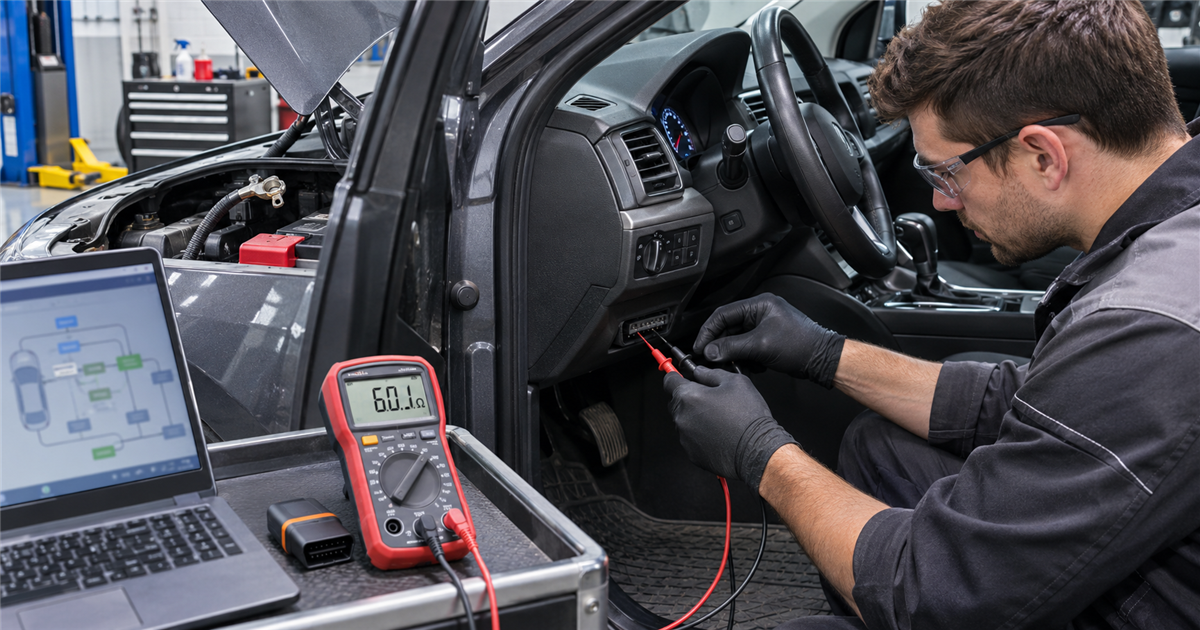
CAN Bus Termination Resistance: How to Test 60 Ohms and Interpret the Result
Dowiedz się więcej: CAN Bus Termination Resistance: How to Test 60 Ohms and Interpret the ResultLearn how to measure CAN bus termination resistance safely and interpret readings near 60, 120, 40, zero, or open circuit without misdiagnosing modules.
-
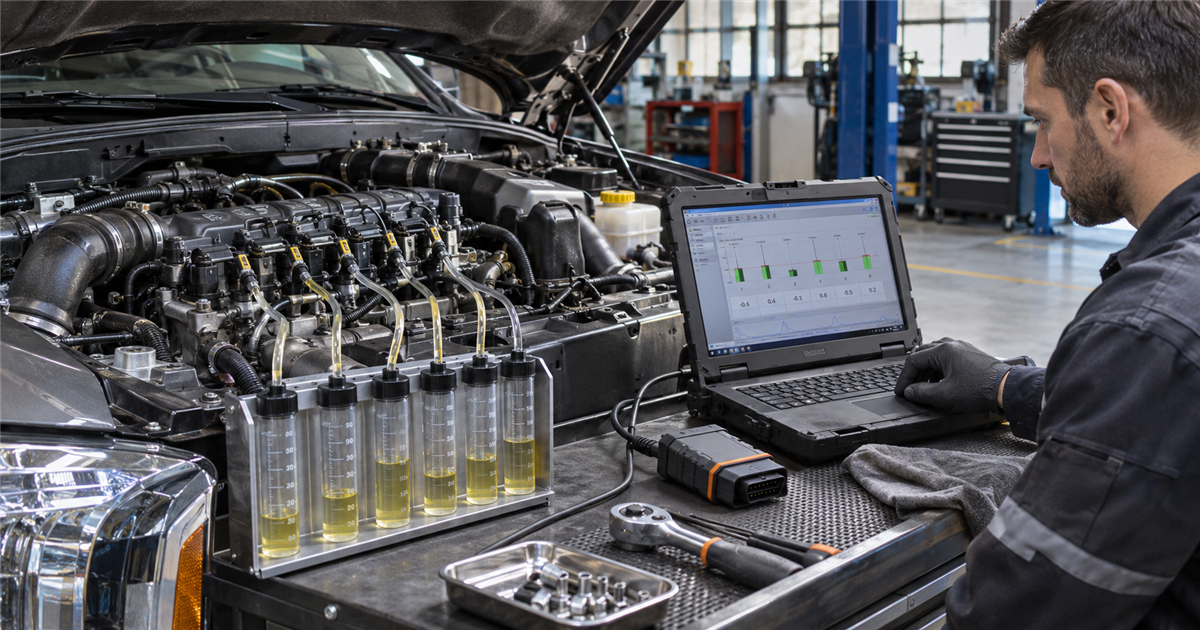
Diesel Injector Correction Values Explained: What the Numbers Mean and When to Investigate
Dowiedz się więcej: Diesel Injector Correction Values Explained: What the Numbers Mean and When to InvestigateLearn what diesel injector correction values mean, why positive or negative balance rates change, and which tests should confirm the diagnosis.
-

ADAS Calibration Pre-Checks: What Diagnostic Software Can and Cannot Verify
Dowiedz się więcej: ADAS Calibration Pre-Checks: What Diagnostic Software Can and Cannot VerifyPrepare for ADAS calibration by checking sensors, vehicle geometry, alignment, targets, workspace conditions, scan data, and software limitations.
-
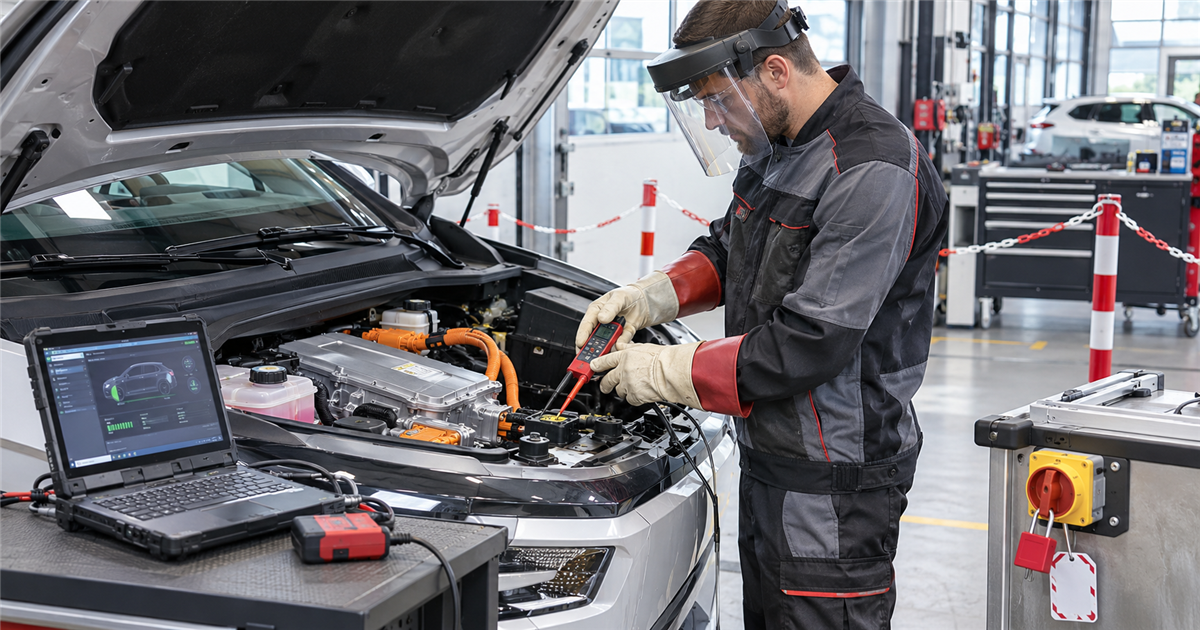
Electric Vehicle Diagnostic Safety: Isolation Checks, PPE, and Scan-Tool Limits
Dowiedz się więcej: Electric Vehicle Diagnostic Safety: Isolation Checks, PPE, and Scan-Tool LimitsUnderstand EV diagnostic safety, qualified-work boundaries, high-voltage isolation, PPE, absence-of-voltage testing, and scan-tool limitations.
-
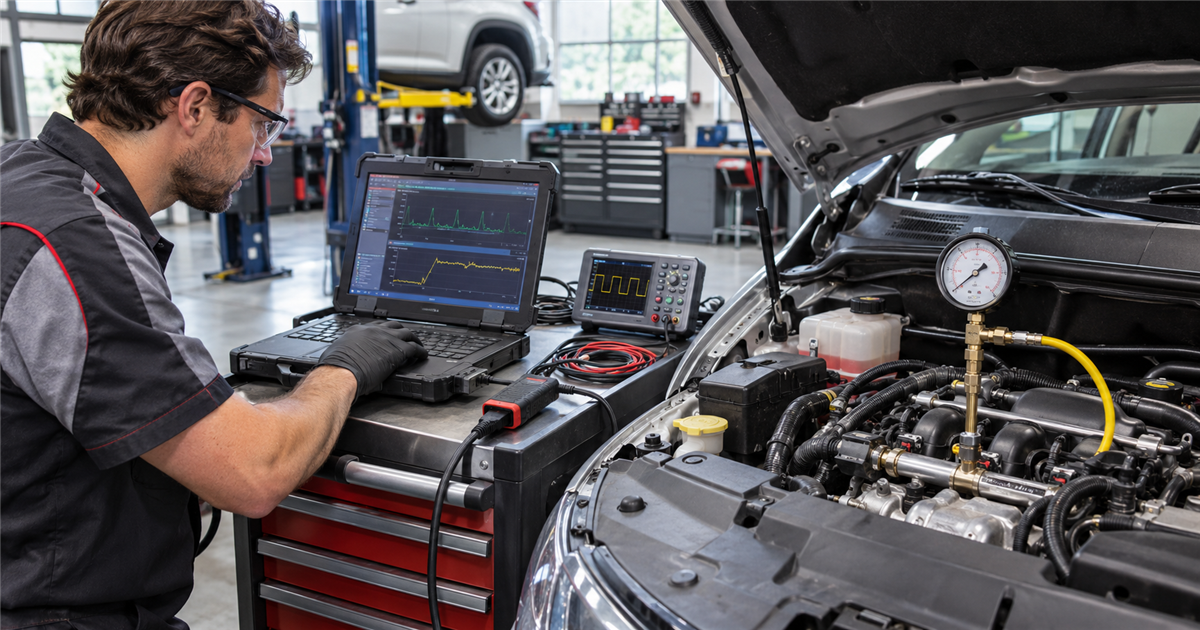
How to Diagnose a No-Start Condition with Scan Data, Fuel Pressure, and Crank Signals
Dowiedz się więcej: How to Diagnose a No-Start Condition with Scan Data, Fuel Pressure, and Crank SignalsFollow a practical crank-no-start workflow using scan data, fuel-pressure testing, crank and cam signals, spark, injection, and mechanical checks.
-

Bidirectional Controls Explained: How Active Tests Speed Up Vehicle Diagnosis
Dowiedz się więcej: Bidirectional Controls Explained: How Active Tests Speed Up Vehicle DiagnosisLearn how active tests command vehicle components, how to interpret the response, and how bidirectional controls can shorten a safe diagnostic workflow.
-

Oscilloscope Basics for Automotive Diagnostics: When a Scan Tool Is Not Enough
Dowiedz się więcej: Oscilloscope Basics for Automotive Diagnostics: When a Scan Tool Is Not EnoughLearn when to add an oscilloscope to scan-tool diagnosis, how to set up useful captures, and what to consider when choosing automotive equipment.
-

How to Diagnose Network Communication Codes Without Replacing Good Modules
Dowiedz się więcej: How to Diagnose Network Communication Codes Without Replacing Good ModulesLearn a disciplined workflow for diagnosing U-codes, missing modules, power faults, and CAN wiring without replacing control modules unnecessarily.
-

Diagnostic Trouble Code History vs Current vs Pending: What Each Status Really Means
Dowiedz się więcej: Diagnostic Trouble Code History vs Current vs Pending: What Each Status Really MeansLearn what current, pending, confirmed, history, and permanent DTC labels mean, how they change, and what each status tells you to test next.
 English
 German
 Spanish
 Italian
 French
 Hebrew
 Dutch
 Finnish
 Norwegian
 Swedish
 Polish